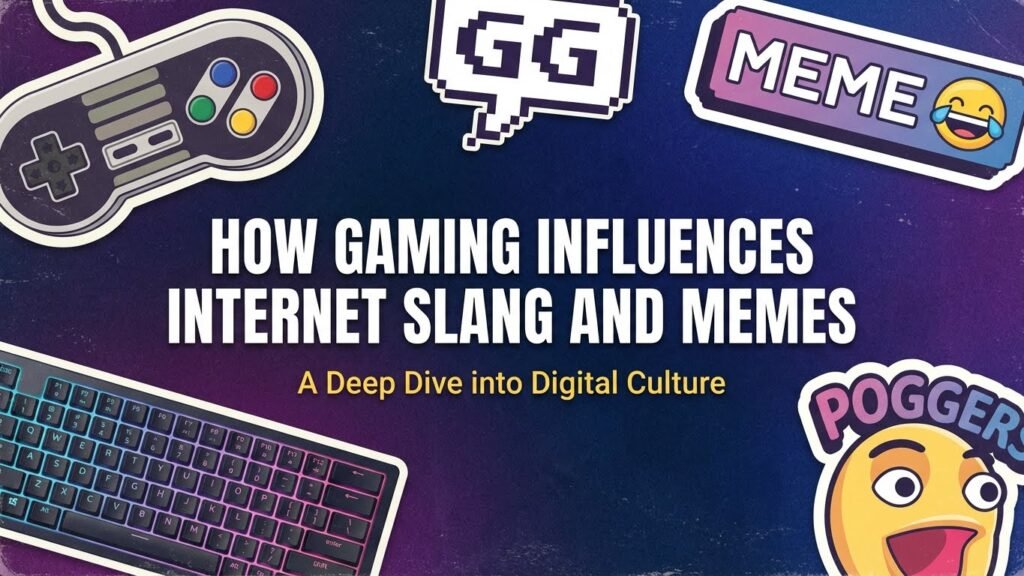

Explore how gaming shapes internet slang and memes, from brainrot to viral phrases. Learn why gaming communities drive online language trends and digital culture.
Gaming has become one of the most powerful forces shaping internet culture, generating countless slang terms and memes that spread far beyond gaming communities. From casual phrases used in everyday online conversation to viral trends that dominate social media, gaming’s linguistic influence reaches every corner of the internet. Understanding how gaming drives language evolution reveals the deep connections between play, communication, and digital culture in the modern world.
Gaming as a Linguistic Laboratory
Gaming communities function as intensive language development environments where millions of players communicate constantly about shared experiences. This creates perfect conditions for rapid vocabulary innovation and testing.
Multiplayer games require efficient communication under time pressure. Players develop shorthand, abbreviations, and specialized terms to convey complex tactical information quickly. This necessity drives linguistic innovation at remarkable speeds.
The repetitive nature of gaming creates shared reference points that entire communities understand. Experiencing the same gameplay moments, frustrations, and victories thousands of times generates inside knowledge that slang can reference efficiently.
Gaming culture’s global nature means slang often crosses linguistic boundaries. Terms emerge in one language community and spread internationally through gameplay, creating hybrid vocabularies that blend multiple languages.
From Game Mechanics to Everyday Language
Many common internet terms originated directly from game mechanics. Understanding their gaming origins reveals how deeply games have influenced broader digital communication.
The term “noob” came from gaming to describe inexperienced players. It has expanded far beyond games to describe anyone new to any activity or context. This demonstrates how gaming vocabulary colonizes general internet language.
“Level up” originally described character progression in RPGs but now commonly describes any form of improvement or advancement in real life. The gaming metaphor proved so useful that it entered mainstream vocabulary.
“Grinding” referred to repetitive gameplay to gain experience or resources. Now people grind at work, school, or fitness, applying gaming concepts to describe real-world effort and persistence.
“Rage quit” perfectly captures the experience of abandoning something in frustration. The term originated in gaming but now describes any angry departure from situations, conversations, or commitments.
Competitive Gaming and Trash Talk Vocabulary
Competitive gaming generates enormous amounts of communication, much of it emotionally charged. This environment produces distinctive slang that spreads throughout internet culture.
Terms like “owned,” “pwned,” and “rekt” emerged from competitive gaming to celebrate defeating opponents. These terms spread across the internet to describe any situation where someone comprehensively loses or fails.
“Git gud” started as sarcastic advice to struggling players but became a widespread meme about improvement through effort. The intentional misspelling adds humor while maintaining the core message.
“Camping” describes players staying in advantageous positions rather than moving around maps. The term now applies to anyone exploiting safe strategies in any competitive context.
“Tryhard” originated as an insult for players taking games too seriously. It spread to describe anyone putting excessive effort into activities others consider casual or unimportant.
Streaming Culture’s Linguistic Impact
Twitch and YouTube gaming created new communication patterns where streamers talk continuously for hours while audiences respond in real-time chat. This unique format generates tremendous linguistic innovation.
Streamer catchphrases become memes that spread across platforms. Popular creators develop signature phrases that millions of viewers internalize through repeated exposure, spreading far beyond original contexts.
Emote culture on Twitch created visual language elements that supplement text. While emotes themselves don’t travel easily to other platforms, the concepts they represent often inspire equivalent slang terms.
Chat spam and copypasta originated in streaming culture. The repetitive posting of text blocks became its own form of communication that spread to other platforms and contexts.
Brainrot particularly connects to streaming culture, as viewers consuming hours of gaming content daily experience the mental saturation the term describes. Streamers themselves discuss their own brainrot from playing games continuously.
Meme Formats Born From Gaming
Gaming provides endless material for meme creation. Specific games, moments, and mechanics become templates for viral content that spreads across the internet.
“Press F to pay respects” originated from a Call of Duty cutscene and became a ubiquitous way to acknowledge loss, failure, or unfortunate situations online. The absurdity of reducing mourning to a button press resonated widely.
“The cake is a lie” from Portal became shorthand for broken promises or false incentives. The phrase spread far beyond people who played the game to become general internet vocabulary.
Dark Souls generated multiple meme formats around difficulty and perseverance. “You died” screens and discussions of punishing gameplay spawned language about challenge and failure across contexts.
Among Us created “sus” as mainstream slang. While the word existed before, the game’s popularity pushed it into widespread usage far beyond gaming communities.
Gaming Toxicity and Language Evolution
Gaming’s competitive nature and relative anonymity create environments where toxic language flourishes. While problematic, this also generates slang that reflects internet culture’s edgier aspects.
Terms describing poor performance, like “feeding,” “throwing,” or “inting” spread from games to describe any self-destructive behavior. These gaming-origin terms now appear in political discussions, business contexts, and social commentary.
The concept of “tilting” came from poker but gaming communities popularized it widely. Describing emotional frustration affecting performance proved useful across competitive contexts.
“Griefing” described players intentionally ruining others’ experiences in games. The term now applies to any malicious disruption of communities or activities.
Gaming communities also generate pushback against toxicity through terms like “wholesome,” which gaming subreddits helped popularize as describing positive, supportive content and behavior.
Gaming Slang in Mainstream Media
As gaming has entered mainstream culture, its vocabulary has infiltrated traditional media, advertising, and everyday conversation beyond internet spaces.
Sports commentary increasingly uses gaming terms. Athletes “level up,” teams “grind” through seasons, and comeback victories involve “clutch” performances. Gaming language has colonized sports discourse.
Business contexts adopt gaming vocabulary to describe work and career progression. Companies talk about “leveling up” skills, “grinding” through projects, or being “in the meta” of their industries.
Educational settings use gaming language to engage students. Gamification incorporates explicit gaming concepts, but even traditional education increasingly references gaming culture that students understand intuitively.
Political discourse uses gaming slang frequently. Politicians are described as “playing” certain strategies, taking “L’s” for losses, or “speedrunning” policy disasters.
Regional Gaming Communities and Dialect Variation
Different gaming regions contribute distinctive slang reflecting local languages and cultures. This creates diverse streams of vocabulary that sometimes merge in global gaming spaces.
Korean gaming communities contributed terms like “inting” from “intentional feeding.” Korean internet cafe culture and professional gaming scene generated language that spread internationally through competitive games.
Brazilian gaming communities created Portuguese-English hybrid slang that appears in international game servers. Terms blend languages creatively, reflecting Brazil’s massive gaming population.
European gaming servers develop multilingual slang combining English with various European languages. This linguistic melting pot creates unique vocabulary through cross-cultural contact.
North American gaming communities, particularly through major streamers and content creators, exert enormous influence on global gaming language due to platform dominance and large English-speaking audiences.
The Role of Game Design in Language Creation
Game mechanics themselves inspire vocabulary describing real-world phenomena. Designers inadvertently create conceptual frameworks that players apply beyond gaming.
“Respawn” describes returning after death in games but now metaphorically describes recovering from failures or setbacks. The gaming concept provided useful language for resilience.
“Save point” refers to moments preserving progress, but people now describe life moments as save points before major changes or decisions.
“Boss battle” originally described challenging game encounters but now describes any major test or confrontation, from job interviews to difficult conversations.
“Tutorial level” describes introductory experiences in games but commonly references any beginner-friendly introduction to complex activities or situations.
Gaming Acronyms and Abbreviations
Gaming’s need for quick communication generated countless abbreviations that spread throughout internet culture. These compressed forms enable rapid text-based coordination.
“GG” for “good game” became perhaps the most universal gaming term. It spread beyond games to acknowledge any completed activity or accepted defeat gracefully.
“AFK” meaning “away from keyboard” describes unavailability in any online context now, not just gaming. The term filled a gap in digital communication about presence and availability.
“OP” for “overpowered” describes anything excessively strong or effective. The term appears in discussions of everything from game balance to policy proposals.
“Nerf” came from reducing power of game elements but now describes weakening anything. “Buff” similarly describes strengthening or improving.
Speedrunning and Internet Culture
Speedrunning communities developed their own rich vocabulary that influenced broader internet culture. The dedication required to optimize gameplay created linguistic innovation around efficiency and mastery.
Terms like “any percent” and “glitchless” describe different speedrunning categories but now metaphorically describe approaches to any goal. Doing something “any percent” means using any means necessary.
“Frame perfect” describes pixel-precise timing requirements but now describes any situation requiring exact precision or perfect execution.
Speedrunning’s influence on content creation introduced language about optimization, routing, and time-saving strategies that appears in productivity discussions and life advice content.
Gaming’s Impact on Visual Meme Culture
Gaming provides endless visual content for meme creation. Screenshots, gameplay clips, and character models become templates for viral content.
Reaction images from games populate meme libraries. Characters expressing emotions, iconic scenes, or absurd moments get recontextualized across countless situations.
Gaming glitches and bugs generate particularly memorable memes. Visual oddities like T-posing characters or physics failures create shareable content that transcends gaming contexts.
Character designs from games become meme templates. Wojak and Pepe originated outside gaming but games popularized many variations. Meanwhile, gaming-specific characters generate their own meme formats.
The Feedback Loop Between Gaming and Internet Culture
Gaming both influences and gets influenced by broader internet culture, creating feedback loops that accelerate linguistic and meme evolution.
Streamers bring memes from other internet sources into gaming contexts, while gaming generates content that spreads to other platforms. This constant exchange blurs boundaries between gaming culture and general internet culture.
Game developers increasingly reference internet memes within games themselves. These inclusions validate and spread memes while creating new layers of reference that generate additional content.
Gaming communities actively participate in broader meme culture, remixing viral content through gaming lenses. This participation ensures gaming perspectives influence how memes evolve.
Educational Value of Gaming Slang
Gaming vocabulary often teaches language concepts efficiently. The need to communicate complex ideas quickly creates elegant linguistic solutions that prove useful beyond games.
Gaming slang demonstrates language evolution in real time. Students and researchers studying linguistics can observe how terms emerge, spread, and either establish themselves or fade away.
Multilingual gaming communities show language contact and pidgin development. Players from different linguistic backgrounds create hybrid communication systems that linguists find fascinating.
Gaming’s global reach means slang often crosses cultural boundaries more easily than traditional language. This creates opportunities for cultural exchange and mutual influence.
Brainrot and Gaming Language Saturation
The brainrot phenomenon connects closely to gaming’s linguistic influence. Players immersed in gaming culture develop mental frameworks where gaming concepts feel more natural than traditional language.
Gaming terminology infiltrates everyday thinking for dedicated players. They mentally analyze real situations using gaming concepts, seeing life through frameworks games provided.
The saturation of gaming language in broader internet culture means even non-gamers encounter gaming terms constantly. This ubiquity contributes to collective brainrot around gaming concepts and vocabulary.
Younger generations growing up surrounded by gaming language internalize these concepts as natural rather than borrowed from games. For them, gaming vocabulary represents core internet language rather than specialized jargon.
Commercial Exploitation of Gaming Language
Marketers recognize gaming’s linguistic influence and incorporate gaming terms into advertising campaigns. This commercial adoption both validates and potentially dilutes gaming vocabulary.
Brands attempting to connect with gaming audiences use gaming slang in marketing. Success depends on authentic understanding versus superficial adoption that feels forced.
Products named using gaming terms leverage cultural recognition. Energy drinks, snacks, and various products adopt gaming vocabulary to signal target demographics.
The commercialization of gaming language represents its mainstream acceptance but also risks alienating core communities who value authentic usage over corporate appropriation.
The Future of Gaming’s Linguistic Influence
Gaming’s influence on language will likely intensify as virtual and augmented reality create more immersive experiences requiring new vocabulary to describe.
Esports growth brings gaming vocabulary into sports media and mainstream entertainment. As competitive gaming gains legitimacy, its language spreads to broader audiences.
Game streaming continues expanding, exposing more people to gaming culture daily. This constant exposure normalizes gaming vocabulary across demographics.
Younger generations growing up gaming will carry this vocabulary throughout their lives. As they enter professional environments, gaming terms will increasingly appear in business, education, and civic contexts.
Conclusion
Gaming influences internet slang and memes more profoundly than almost any other cultural force. The unique combination of shared experiences, competitive pressure, global communities, and constant communication creates ideal conditions for linguistic innovation.
Terms originating in gaming contexts have become essential internet vocabulary used by millions who have never played the games that spawned them. This demonstrates gaming’s cultural reach extending far beyond entertainment into fundamental communication patterns.
Understanding gaming’s linguistic influence reveals how digital culture develops language organically through shared experiences and communication needs. Gaming communities function as avant-garde laboratories where tomorrow’s mainstream vocabulary develops today.
As gaming continues growing and evolving, its impact on language will deepen. The brainrot phenomenon itself demonstrates how gaming culture shapes not just what we say but how we think, creating mental frameworks that influence perception and communication across all aspects of digital life.
Learn about internet slang and how brainrot is used in gaming culture.For more queries feel free to contact us.


Pingback: Why Online Communities Create Their Own Language - STEAL A BRAINROT
Pingback: From Memes to Games: How Brainrot Became Mainstream - STEAL A BRAINROT