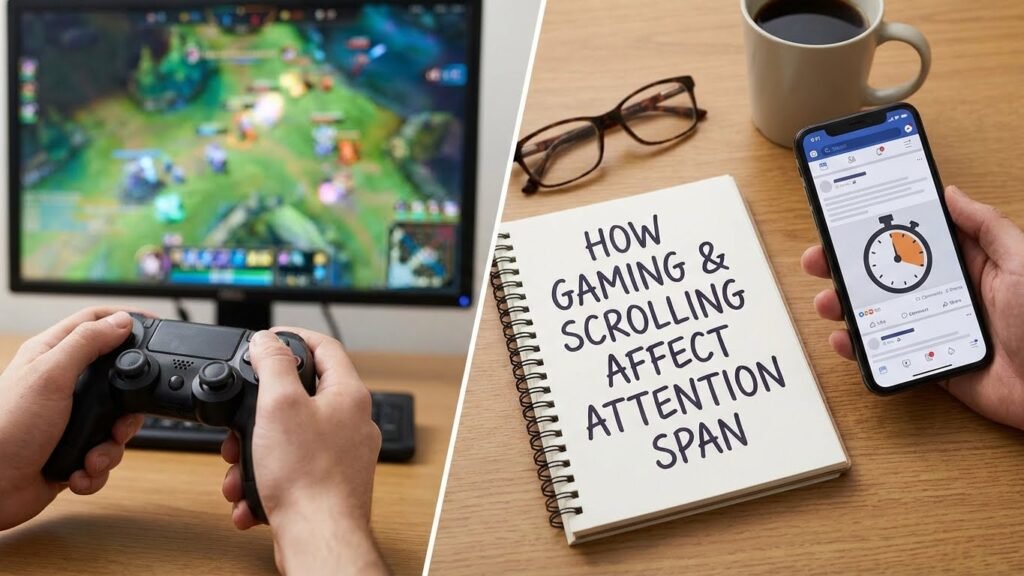

Learn how gaming and scrolling impact attention span and contribute to brainrot. Discover the science behind digital distraction and practical strategies to maintain focus.
Modern life involves unprecedented amounts of screen time, with gaming and social media scrolling consuming hours of daily attention for millions of people. As concerns about declining attention spans grow, understanding how these activities affect our ability to focus has become increasingly important. The connection between gaming, scrolling, and what many call brainrot reveals significant truths about how digital consumption shapes our cognitive abilities.
The Science of Attention in Digital Environments
Attention is not a single unified capacity but rather a complex system involving multiple cognitive processes. Sustained attention allows you to focus on tasks for extended periods. Selective attention helps you filter relevant information from distractions. Executive attention enables you to control where you direct focus consciously.
Digital activities engage these attention systems differently than traditional tasks. Reading a book requires sustained attention over long periods with minimal external stimulation. Gaming and scrolling, however, provide constant novelty and stimulation that engage different neural pathways and create distinct cognitive patterns.
Your brain adapts to whatever activities you do most frequently. This neuroplasticity means that extensive gaming or scrolling literally rewires neural connections, strengthening some pathways while weakening others. These changes affect how your attention system functions even during offline activities.
Research shows that people who spend more time on digital devices often struggle with tasks requiring sustained focus on single subjects. This doesn’t mean their brains are damaged, but rather that they’ve become optimized for different types of attention than previous generations developed.
How Gaming Shapes Attention Patterns
Gaming affects attention in complex ways that aren’t purely negative or positive. Action games and fast paced shooters can actually improve certain attention skills like visual tracking, rapid decision making, and switching focus between multiple elements quickly.
Professional gamers and dedicated players often develop exceptional abilities to process visual information rapidly and make split second decisions under pressure. These skills represent real cognitive enhancements that transfer to other domains requiring similar attention patterns.
However, gaming also conditions players to expect constant stimulation and immediate feedback. Modern games provide rewards, notifications, and exciting events every few seconds or minutes. This conditioning can make activities with slower pacing feel unbearably boring by comparison.
The dopamine reward systems that games activate create expectations for frequent gratification. When real world tasks don’t provide the same constant stream of achievements, level ups, and victories, maintaining attention becomes more challenging. Your brain starts craving the stimulation levels that gaming provides.
The Infinite Scroll Problem
Social media platforms engineered infinite scroll specifically to maximize engagement time. This design removes natural stopping points that help regulate consumption. Every swipe brings new content, creating endless opportunities for continued engagement.
The variable reward schedule of scrolling mimics slot machine psychology. You never know whether the next swipe will show something amazing, mildly interesting, or boring. This unpredictability keeps you scrolling because the next piece of content might be the rewarding one you’re seeking.
Scrolling trains your attention to expect constant novelty. Each piece of content lasts just seconds before you move to the next. Over time, this rapid switching becomes your default mode. Focusing on single subjects for extended periods feels increasingly difficult.
The brief nature of scrolling content means you rarely engage deeply with any single item. Skimming becomes habitual. This shallow processing pattern can persist even when you encounter content worth deeper consideration. Your attention system gets stuck in skim mode.
Brainrot and Attention Degradation
Brainrot describes the mental state that develops from excessive digital consumption, and attention span changes represent core symptoms. People experiencing brainrot often notice they can no longer focus on books, long articles, or extended conversations the way they once could.
The content that creates brainrot is specifically designed to capture and hold attention through rapid stimulation. TikTok videos, gaming highlight reels, and meme compilations all provide concentrated bursts of engaging material. Consuming this content extensively recalibrates what your brain considers normal stimulation levels.
After hours of high stimulation content, normal activities feel understimulating. Lectures seem too slow, conversations feel boring, and traditional entertainment appears unengaging. This isn’t because these activities changed but because your attention system’s baseline shifted.
Brainrot manifests as inability to tolerate slower pacing or delayed gratification. Reading becomes frustrating because it doesn’t provide immediate payoff. Long form content feels tedious. Your attention constantly seeks the rapid hits of novelty and stimulation that scrolling and gaming provide.
The Attention Economy Exploitation
Tech companies understand attention deeply and design products to capture as much as possible. Gaming companies employ psychologists to make games more addictive. Social media platforms use sophisticated algorithms to keep you scrolling. Your attention has become valuable currency.
Engagement metrics drive design decisions across digital platforms. Features that increase time spent on apps get prioritized regardless of their effects on user wellbeing. The business model requires capturing and holding attention, creating inherent conflicts between profit and healthy usage.
Notification systems represent deliberate attention interruption. Every ping, badge, or alert pulls focus away from whatever you’re doing. Even when you resist checking, the notification has already disrupted your attention. These interruptions accumulate throughout the day.
Autoplay features eliminate the natural pause that might allow you to disengage. When one video ends and another starts automatically, you never have to make an active choice to continue consuming. This removes opportunities for self regulation and conscious decision making.
Gaming Versus Scrolling Effects
While both activities affect attention, they do so differently. Gaming often requires active engagement, decision making, and skill development. Many games demand sustained focus on complex objectives over extended play sessions. This can actually build certain types of attention capacity.
Scrolling is generally more passive. You’re consuming rather than creating or strategizing. The cognitive demands are minimal, and the rapid content switching prevents deep engagement. Scrolling conditions your brain for passive reception rather than active processing.
Competitive gaming creates motivation to maintain focus despite distractions. Players must concentrate to perform well, creating practice conditions for sustained attention. However, the high stimulation levels still make less exciting activities harder to focus on afterward.
Scrolling offers no performance incentive to maintain focus. You can zone out completely and still continue scrolling effectively. This passive state may be relaxing but provides no training for attention control or sustained concentration.
Age and Developmental Considerations
Young people experiencing critical brain development periods while immersed in gaming and scrolling may develop different baseline attention patterns than previous generations. Their brains are literally wiring themselves around these activities.
Children exposed to tablets and smartphones from early ages show different attention development trajectories. Some research suggests decreased ability to engage in free play, maintain focus on single activities, or tolerate boredom without external stimulation.
Adolescents building study habits and work discipline while battling constant digital distractions face unique challenges. The pull of gaming and social media directly competes with homework, reading, and other activities requiring sustained focus.
Adults who developed attention patterns before smartphones entered their lives often notice concrete changes in their capacity to focus after years of heavy digital use. The brain remains plastic throughout life, meaning attention patterns can shift at any age.
The Multitasking Myth
Many people believe they can game, scroll, and maintain attention on other tasks simultaneously. However, research consistently shows that human brains cannot truly multitask. Instead, we rapidly switch between tasks, and each switch carries cognitive costs.
Attempting to study while checking social media or gaming creates fragmented attention that reduces learning effectiveness. Every time you shift focus, you lose time reorienting to the previous task. These small losses accumulate into significant productivity decreases.
Background scrolling while watching TV or talking with others prevents full engagement with either activity. You might think you’re doing both, but you’re actually doing neither well. This fragmented attention becomes habitual, making single tasking feel strange.
The constant task switching that digital life encourages trains your brain for fragmentation rather than focus. Over time, sustained single task attention becomes harder to achieve even when you consciously try.
Physical Brain Changes
Neuroimaging studies reveal actual structural and functional brain differences associated with heavy digital media use. Regions involved in attention control, impulse regulation, and reward processing show altered activity patterns.
The prefrontal cortex, responsible for executive functions including attention control, appears affected by excessive screen time. Some studies suggest reduced gray matter density in areas associated with decision making and impulse control.
White matter integrity, which affects how efficiently different brain regions communicate, may be impacted by problematic gaming or social media use. These changes can affect overall cognitive coordination including attention management.
However, brain plasticity means these changes aren’t necessarily permanent. Reducing screen time and engaging in activities requiring sustained focus can help rebuild attention capacities. The brain adapts to whatever you practice most.
Real World Consequences
Attention difficulties affect academic performance significantly. Students struggling to focus on lectures, read textbooks, or complete assignments without digital interruptions see grades suffer. The constant availability of more stimulating alternatives makes studying genuinely harder.
Professional productivity declines when workers cannot maintain focus without checking phones or taking gaming breaks. Tasks that require deep work, complex problem solving, or sustained concentration become more challenging and time consuming.
Relationships suffer when people cannot maintain attention during conversations. Being physically present while mentally distracted by digital cravings prevents genuine connection. Partners, friends, and family members notice and resent divided attention.
Personal wellbeing erodes when you cannot enjoy activities without constant stimulation. Reading for pleasure, nature walks, meditation, or simply sitting with thoughts all require attention capacities that excessive gaming and scrolling can diminish.
Strategies for Protecting Attention
Setting clear boundaries around gaming and scrolling helps prevent attention degradation. Designated screen free times, especially before bed and first thing in morning, protect periods when attention is freshest.
Using apps that limit screen time or block certain sites removes temptation during focus periods. Physical barriers like keeping phones in other rooms while working or studying reduce interruption opportunities.
Practicing sustained focus deliberately rebuilds attention capacity. Start with manageable durations like fifteen minutes of uninterrupted reading, gradually increasing over time. This strengthens attention muscles like any other training.
Engaging in activities requiring natural sustained attention provides balance. Sports, musical instruments, art, cooking, or building projects all demand focus without artificial stimulation. Regular practice develops broader attention capabilities.
The Pomodoro Technique and Focus Training
Structured focus methods like the Pomodoro Technique help rebuild attention spans. Working in timed intervals with scheduled breaks creates achievable focus goals while acknowledging attention limitations.
Starting small with five or ten minute focus sessions and gradually extending duration builds capacity without overwhelming frustration. Celebrating small victories reinforces the habit and makes improvement feel achievable.
Combining focus training with rewards creates positive associations. After completing a sustained attention session, allowing brief gaming or scrolling time leverages these activities as motivation rather than letting them dominate.
Tracking progress shows concrete improvement over time. Noticing that you can now focus for thirty minutes when you previously struggled with ten provides encouraging feedback that motivates continued effort.
Mindfulness and Attention Recovery
Meditation practices specifically target attention control. Mindfulness exercises train you to notice when attention wanders and gently redirect it, building the exact skills that gaming and scrolling can erode.
Even brief daily meditation sessions improve attention regulation. Five minutes of focused breathing provides practice in sustaining attention on a single object despite the mind’s tendency to wander toward more stimulating thoughts.
Mindful consumption of digital content means making conscious choices about what you engage with and for how long. Asking whether scrolling or gaming serves genuine purposes rather than automatic habits increases intentionality.
Body awareness practices help you notice physical signs of attention fatigue. Recognizing restlessness, eye strain, or mental fog as signals to take breaks prevents pushing beyond healthy attention limits.
The Role of Sleep and Physical Health
Sleep deprivation severely impairs attention regardless of digital habits. Gaming or scrolling late into the night creates double damage through both the activities themselves and the sleep loss they cause.
Physical exercise improves attention capacity significantly. Movement increases blood flow to the brain, supports neuroplasticity, and provides natural dopamine that reduces cravings for digital stimulation.
Nutrition affects cognitive function including attention control. Stable blood sugar from balanced meals supports sustained focus better than the crashes that follow processed foods and sugar spikes.
Hydration matters more than many people realize. Even mild dehydration impairs cognitive performance including attention. Drinking adequate water throughout the day supports optimal brain function.
Finding Balance Rather Than Elimination
Complete avoidance of gaming and scrolling isn’t necessary or realistic for most people. The goal should be conscious, controlled engagement rather than elimination. Understanding your limits and respecting them creates sustainable patterns.
Gaming can provide genuine benefits including stress relief, social connection, and cognitive skills. The key is preventing it from crowding out other important activities or degrading overall attention capacity through excess.
Social media serves real purposes for communication, information, and community. Using it intentionally for specific purposes rather than mindless scrolling preserves its benefits while reducing attention costs.
Self awareness about how these activities affect your personal attention helps you make informed choices. Some people can game heavily without attention issues while others struggle after minimal exposure. Know yourself.
Conclusion
Gaming and scrolling affect attention span through multiple mechanisms including neuroplasticity, reward system conditioning, and habituation to rapid stimulation. While these effects are real and measurable, they’re not inevitable or irreversible.
Understanding how brainrot develops through excessive digital consumption empowers you to make intentional choices about technology use. Recognizing attention changes as they happen allows early intervention before patterns become deeply entrenched.
The relationship between gaming, scrolling, and attention represents one of the defining challenges of modern life. Successfully navigating this landscape requires awareness, intentionality, and practical strategies for protecting cognitive capacities while still enjoying digital benefits.
Your attention is valuable and finite. Treating it as a precious resource worth protecting ensures that gaming and scrolling enhance rather than diminish your life. Balance, awareness, and deliberate practice can maintain healthy attention spans even in our highly digital world.