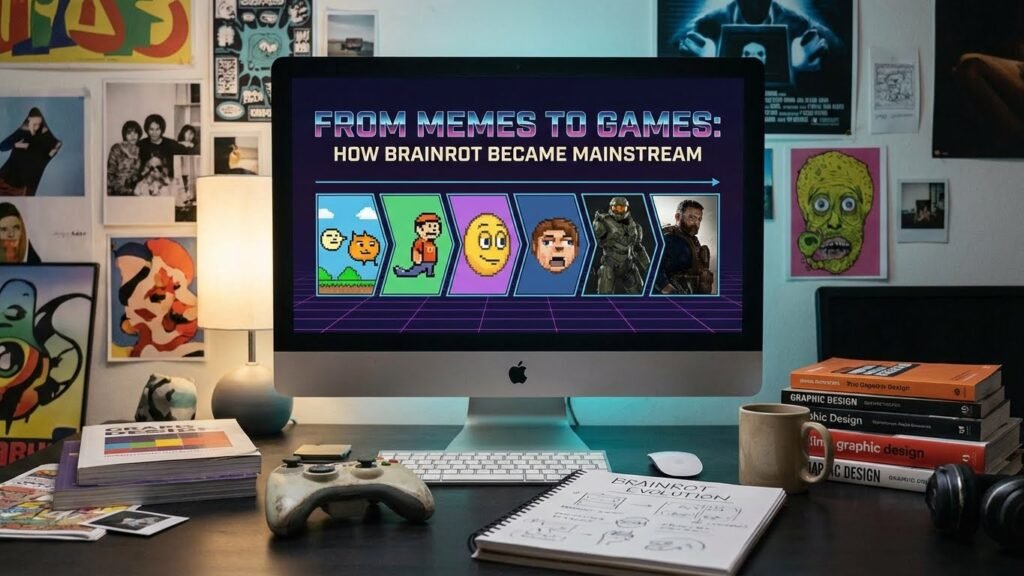

Trace how brainrot evolved from niche meme to mainstream term. Discover the journey through gaming, social media, and culture that made brainrot everywhere.
The journey of brainrot from obscure internet slang to Oxford Dictionary’s 2024 Word of the Year represents one of the most fascinating linguistic phenomena of the digital age. This term didn’t become mainstream through traditional pathways but instead traveled through interconnected networks of memes, gaming communities, streaming platforms, and social media ecosystems. Understanding how brainrot achieved mainstream recognition reveals important insights into modern culture, communication, and how language evolves in the internet era.
The Early Origins in Niche Communities
Brainrot existed in various forms across different internet communities long before achieving widespread recognition. Early uses appeared in forum discussions about excessive media consumption and its mental effects.
Anime and fandom communities used variations of the term to describe obsessive engagement with particular shows or characters. The concept of media “rotting your brain” wasn’t new, but these communities began using brainrot as a semi-affectionate descriptor.
Gaming forums in the mid 2010s started employing brainrot to describe the mental state after extended play sessions. Players joked about having League of Legends brainrot or Dark Souls brainrot when they couldn’t stop thinking about games.
These early uses remained relatively contained within specific communities. The term had meaning for insiders but hadn’t yet developed the cultural momentum necessary for broader spread.
Gaming Communities as Incubators
Gaming communities provided the perfect environment for brainrot to evolve and gain traction. The repetitive nature of gaming, combined with intense community engagement, created genuine brainrot experiences that the term described perfectly.
Streamers began using brainrot to describe both their own mental states and the content they produced. A streamer might joke about creating pure brainrot content when doing repetitive grinding or silly challenges.
The competitive gaming scene particularly embraced brainrot vocabulary. Players discussed ranked brainrot when describing obsessive competitive play that dominated their thinking even outside gaming sessions.
Esports communities reinforced the term through constant usage. Professional players, analysts, and fans all adopted brainrot to describe various aspects of gaming culture and experience.
The Twitch and Streaming Explosion
Twitch streaming culture accelerated brainrot’s spread dramatically. Hours of live content with real-time chat created perfect conditions for linguistic innovation and propagation.
Popular streamers using brainrot introduced the term to audiences numbering in the thousands or millions. Each stream became a linguistic broadcast spreading vocabulary to devoted viewers.
Chat culture on Twitch reinforced terms through constant repetition. When viewers spam brainrot in chat repeatedly, the term becomes embedded through sheer frequency of exposure.
Clip culture took moments from streams and spread them across platforms. Short clips featuring streamers discussing or demonstrating brainrot reached audiences beyond regular viewers, expanding the term’s exposure.
TikTok’s Amplification Effect
TikTok transformed brainrot from gaming and streaming slang into genuinely mainstream vocabulary. The platform’s algorithm and format proved perfectly suited for spreading the term.
Short form videos discussing brainrot content went viral repeatedly. Creators made compilations of brainrot inducing material, meta commentary on brainrot culture, or jokes about their own brainrot.
The algorithm showed brainrot content to users who engaged with similar videos, creating concentrated exposure. People found themselves in brainrot content rabbit holes, experiencing the phenomenon while learning the term.
Sound bites and audio clips featuring the word brainrot became popular, appearing in thousands of videos. This audio repetition drilled the term into users’ consciousness through constant exposure.
Meme Culture Integration
Brainrot became integral to meme culture, appearing in countless formats and variations. This meme integration transformed the term from descriptor to cultural touchstone.
Image macros and reaction memes incorporated brainrot vocabulary. Formats like “POV you have [specific thing] brainrot” became templates for endless variations.
The self-referential nature of brainrot memes created feedback loops. Memes about brainrot were themselves brainrot content, and jokes about this meta quality generated more memes.
Ironic usage became popular, with people claiming brainrot about increasingly absurd subjects. This playful deployment spread the term while keeping it fresh and entertaining.
YouTube and Long Form Content
YouTube creators discussing internet culture began analyzing brainrot as a phenomenon. These longer explanatory videos introduced the term to audiences seeking to understand internet trends.
Commentary channels made videos titled things like “The Brainrot Epidemic” or “Why Gen Z Has Brainrot,” bringing academic-adjacent analysis to the concept and legitimizing it as worthy of serious discussion.
Compilation videos gathered examples of brainrot content from across platforms. These compilations both demonstrated the phenomenon and spread awareness of the terminology.
Educational content creators used brainrot as a case study when discussing attention spans, digital culture, or media consumption. This positioned the term within broader cultural conversations.
The Skibidi Toilet Phenomenon
Certain viral content became synonymous with brainrot, and Skibidi Toilet emerged as perhaps the definitive example. This bizarre animated series became shorthand for peak brainrot.
The incomprehensible nature of Skibidi Toilet to anyone outside specific demographics made it perfect for discussions about generational brainrot differences. Parents baffled by what their children watched drove conversations using brainrot terminology.
Media coverage of Skibidi Toilet frequently employed brainrot to explain the phenomenon. Journalists writing about the viral series introduced the term to readers who might never encounter it otherwise.
The content became so associated with brainrot that mentioning one almost required mentioning the other. This connection reinforced both the content and the terminology through mutual reference.
Reddit and Forum Discussions
Reddit communities dedicated to discussing internet culture, memes, and digital trends regularly featured brainrot in titles and discussions. These communities analyzed and documented the phenomenon.
Subreddits like r/okbuddyretard, r/196, and others embraced brainrot aesthetics deliberately. Creating intentionally brainrot content became a form of meta humor within these communities.
Ask Reddit threads about internet culture frequently referenced brainrot. Questions like “What gives you brainrot?” or “What’s the worst brainrot content you’ve seen?” generated thousands of responses.
The upvote system meant brainrot discussions that resonated got amplified, increasing visibility and reinforcing the term’s prevalence within Reddit’s massive user base.
Cross-Platform Migration Patterns
Brainrot’s journey across platforms followed predictable patterns, with each platform adding new dimensions to the term’s meaning and usage.
Twitter users adopted brainrot from gaming and streaming communities, applying it to political discourse, fandom discussions, and cultural commentary. The term gained intellectual and critical dimensions on Twitter.
Instagram meme pages spread visual brainrot content with accompanying terminology. The platform’s younger demographic embraced the term enthusiastically.
Discord servers across countless interest areas incorporated brainrot into their unique vocabularies. Private communities used the term in ways specific to their focuses while contributing to overall normalization.
Generational Adoption and Adaptation
Different generations encountered and adopted brainrot differently, with usage patterns reflecting generational digital experiences and communication styles.
Gen Z embraced brainrot most thoroughly, using it as everyday vocabulary to describe common experiences. For them, the term felt natural and necessary.
Millennials adopted brainrot more self-consciously, often using it ironically or analytically. They recognized it as newer slang while appreciating its descriptive precision.
Gen Alpha grew up with brainrot as existing vocabulary rather than emerging slang. For the youngest internet users, the term was already established when they became culturally aware.
Older generations encountered brainrot through media coverage or younger family members. Their adoption patterns reflected outsider learning rather than organic community integration.
Media Coverage and Legitimization
Traditional media covering internet culture and digital trends began featuring brainrot in articles about youth culture, attention spans, and online behavior.
Think pieces examining digital culture’s effects on cognition used brainrot as accessible terminology. This journalistic adoption introduced the term to audiences beyond internet natives.
Television shows and podcasts discussing internet trends explained brainrot to listeners unfamiliar with the concept. These explanations spread awareness while validating the term as culturally significant.
Academic interest emerged, with researchers studying attention, digital media, and internet culture incorporating brainrot into their analyses. This scholarly attention granted additional legitimacy.
The Oxford Dictionary Moment
Oxford Dictionary selecting “brain rot” as 2024’s Word of the Year represented the ultimate mainstream validation. This recognition confirmed brainrot’s cultural significance beyond internet communities.
The announcement generated massive media coverage globally. News outlets worldwide reported on the selection, explaining the term to international audiences.
Social media erupted with reactions to the announcement. People shared opinions, joked about the meta nature of brain rot winning, and discussed what the selection revealed about contemporary culture.
The dictionary addition created a formal record of the term’s existence and meaning. Future generations will find brain rot documented in authoritative linguistic sources.
Commercial and Marketing Adoption
Brands recognized brainrot’s cultural resonance and began incorporating it into marketing aimed at younger demographics. This commercial adoption marked another stage of mainstreaming.
Social media marketing campaigns referenced brainrot to signal cultural awareness. Brands joked about creating brainrot content or acknowledged their products’ contribution to brainrot culture.
Content creators sponsored by brands began using brainrot in promotional material. This blended organic and commercial usage, normalizing the term across contexts.
Product names and slogans occasionally incorporated brainrot references. While some felt forced, successful implementations demonstrated the term’s marketing utility.
Educational and Institutional Recognition
Schools and educational institutions began acknowledging brainrot when discussing digital literacy, media consumption, and student attention challenges.
Teachers used brainrot vocabulary when discussing screen time and content consumption with students. Speaking students’ language helped bridge generational communication gaps.
Educational content about healthy media habits incorporated brainrot as relatable terminology. This made lessons more accessible to students familiar with the concept.
Parent education programs explained brainrot to help adults understand what their children experienced online. This intergenerational translation work spread awareness broadly.
The Self-Fulfilling Prophecy Effect
Brainrot’s mainstream success created self-fulfilling dynamics where discussing brainrot generated more brainrot content, accelerating the phenomenon it described.
Meta content about brainrot became its own category of brainrot. Videos analyzing brainrot, articles explaining brainrot, and conversations about brainrot all contributed to the saturation.
The irony of brain rot becoming mainstream through the exact mechanisms it critiques wasn’t lost on internet users. This self-aware contradiction generated additional content and discussion.
Mainstream recognition made resisting brainrot harder because the term and concept were now inescapable. Even people trying to avoid brainrot content encountered the vocabulary constantly.
Resistance and Backlash
Not everyone embraced brainrot’s mainstream success. Some communities felt the term became overused, diluted, or misappropriated as it spread.
Early adopters sometimes complained about normies using brainrot incorrectly or without understanding its origins. This gatekeeping reflected anxieties about cultural appropriation and linguistic authenticity.
Some people rejected brainrot entirely as negative or judgmental terminology. They preferred alternative frameworks for discussing digital consumption and attention.
Backlash against brainrot content emerged, with people deliberately avoiding anything labeled as such. This resistance created alternative communities valuing different content types.
International and Cross-Cultural Spread
Brainrot transcended English-speaking internet communities, spreading internationally through translation and cultural adaptation.
Non-English speaking communities developed equivalent terms or adopted brainrot directly into their languages. The concept resonated across cultural boundaries even when specific terminology varied.
International gaming and streaming communities shared brainrot vocabulary through English as a lingua franca. Global platforms facilitated cross-cultural linguistic exchange.
Regional variations emerged as different cultures adapted brainrot to local contexts. These variations enriched the term while maintaining core conceptual continuity.
The Role of Controversy and Moral Panic
Media moral panics about children’s content, screen time, and attention spans amplified brainrot’s visibility. Controversy drove coverage that spread awareness.
Parents concerned about what children watched often invoked brainrot when expressing worries. This parental usage introduced the term into family and educational contexts.
Debates about content regulation, platform responsibility, and digital wellbeing used brainrot as shorthand for complex concerns. The term enabled quick reference to multifaceted issues.
The controversy paradoxically increased engagement with brainrot content. Moral panic generated curiosity that drove viewership of the exact content being criticized.
Brainrot as Cultural Critique
Beyond describing content quality, brainrot evolved into sophisticated cultural critique of attention economies, algorithm design, and digital capitalism’s effects on cognition.
Using brainrot indicated awareness of how platforms manipulate attention for profit. The term carried implicit criticism of exploitative design choices.
Discussions about brainrot often touched on broader questions about technology’s role in society, mental health, and human flourishing. The vocabulary enabled these conversations.
The term’s critical dimension distinguished it from purely descriptive slang. Brainrot carried analytical weight that encouraged reflection on digital culture’s trajectory.
Looking Forward
Brainrot’s mainstream status raises questions about its future evolution. Will it remain culturally relevant or become dated slang that future generations find embarrassingly cringe?
New terminology will inevitably emerge to describe evolving digital experiences. Brainrot may become parent term to increasingly specific descendants describing particular phenomena.
The underlying experiences brainrot describes won’t disappear. Whether this specific vocabulary persists or new terms replace it, people will need language for discussing digital consumption’s mental effects.
Brainrot’s journey from memes to mainstream demonstrates how internet culture increasingly drives broader linguistic and cultural evolution. Digital natives shape language for everyone.
Conclusion
Brainrot’s path to mainstream recognition traveled through gaming communities, streaming culture, meme ecosystems, social media platforms, and eventually traditional media before receiving Oxford Dictionary validation. Each step expanded the term’s reach while adding layers of meaning.
The journey reveals how contemporary language evolution works. Terms don’t slowly percolate up through regional dialects anymore. Instead, they explode across digital networks, achieving global recognition within months through algorithmic amplification and cultural resonance.
Understanding brainrot’s mainstream success illuminates broader patterns of how internet culture shapes language, identity, and shared meaning in the digital age. The term’s ubiquity reflects genuine changes in how people consume content, communicate, and understand their relationship with digital technology.
From obscure gaming slang to Word of the Year, brainrot’s remarkable journey captures something essential about modern life. The term succeeded because it named real experiences that millions recognized, providing vocabulary for discussing digital culture’s effects on consciousness and cognition in accessible, relatable ways.
Learn How Gaming Influences Internet Slang and Memes and Why Online Communities Create Their Own Language and if you want more information contact us.