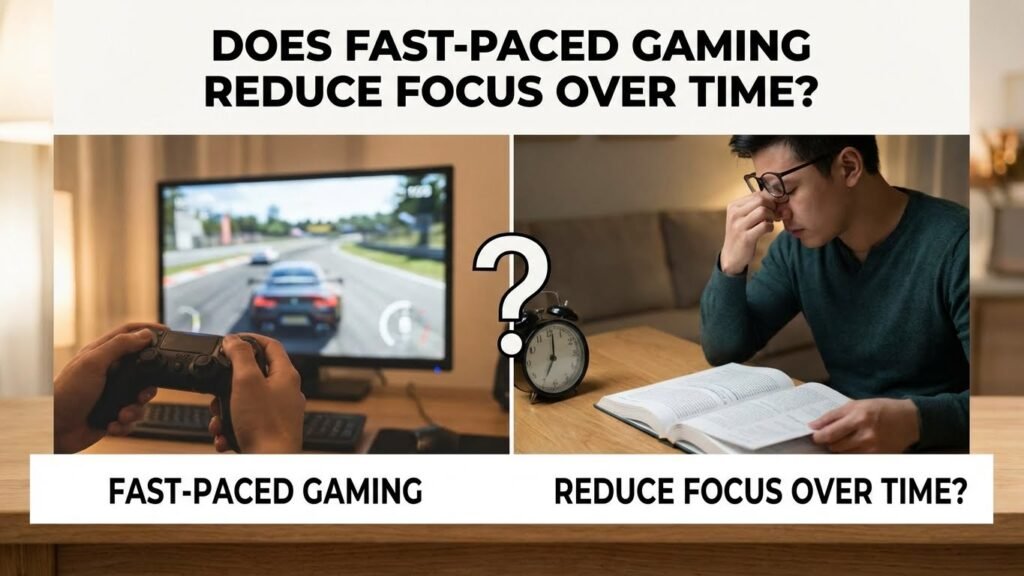

Explore whether fast-paced gaming reduces focus over time and contributes to brainrot. Learn the science behind gaming’s effects on attention and concentration.
Fast-paced gaming has become enormously popular, with millions playing action shooters, battle royales, and competitive multiplayer games that demand split-second reactions and constant vigilance. As gaming becomes more intense and accessible, concerns have emerged about whether these rapid-fire experiences might be reducing our ability to focus on slower-paced activities. The relationship between fast-paced gaming and focus is more complex than simple yes or no answers suggest.
Understanding Fast-Paced Gaming Mechanics
Fast-paced games create environments where events unfold in seconds or milliseconds. First-person shooters require instant target acquisition and firing decisions. Battle royales demand continuous environmental scanning while managing inventory and positioning. Fighting games involve reading opponents and executing precise combo sequences within frame-perfect windows.
These games deliver constant stimulation through visual effects, sound cues, haptic feedback, and reward notifications. Every moment presents new information requiring processing and response. The sensory bombardment creates intense engagement that keeps players locked in focused attention during gameplay.
Action games typically provide feedback loops measured in seconds. You shoot, hit or miss, gain or lose health, win or lose the engagement, and immediately move to the next encounter. This rapid reward cycle creates patterns of expectation that extend beyond gaming sessions.
Modern competitive games add social pressure and ranking systems that intensify engagement. Playing ranked matches activates stress responses that heighten focus during games but may contribute to mental exhaustion afterward. The combination of speed, competition, and social stakes makes these experiences particularly absorbing.
What Research Actually Shows
Scientific studies on gaming and attention reveal nuanced findings that complicate simple narratives. Action video game players often demonstrate superior performance on certain cognitive tests, particularly those measuring visual attention, spatial reasoning, and rapid decision making.
Research published in psychology and neuroscience journals shows that action gamers can track more objects simultaneously, switch attention between tasks more efficiently, and filter relevant information from distractions more effectively than non-gamers. These represent genuine cognitive enhancements.
However, the same research often reveals corresponding weaknesses. Heavy gamers sometimes struggle with sustained attention on single tasks, particularly those lacking dynamic stimulation. They may excel at rapid task switching while finding prolonged focus on unchanging material more challenging.
Longitudinal studies tracking gamers over time show varied results depending on gaming patterns. Moderate gaming often correlates with cognitive benefits, while excessive gaming associates with attention difficulties. The relationship appears non-linear, with both too little and too much showing different effects.
The Divided Attention Training Effect
Fast-paced gaming trains specific attention skills intensively. Players develop exceptional abilities to monitor multiple information streams simultaneously. Checking mini-maps while tracking enemies, managing abilities, and coordinating with teammates all require sophisticated divided attention.
This training transfers to real-world scenarios requiring similar skills. Gamers often perform better at tasks involving rapid visual processing, monitoring multiple displays, or making quick decisions under time pressure. These represent legitimate cognitive advantages.
The question becomes whether excellence in divided attention comes at the cost of sustained single-task focus. Some evidence suggests that training one cognitive system extensively may reduce capacity in competing systems through neural trade-offs.
Gaming-specific neural adaptations might optimize brains for rapid stimulation processing while making slower-paced sustained attention feel less natural. This doesn’t mean the capacity disappears, but it may require more effort to activate after extensive fast-paced gaming.
Dopamine Systems and Reward Expectations
Fast-paced games trigger dopamine release through frequent rewards, victories, level-ups, and achievement notifications. This neurochemical response reinforces gaming behavior but also establishes baseline expectations for stimulation and gratification.
When your brain becomes accustomed to rapid dopamine hits from gaming, activities providing slower or less frequent rewards feel less engaging by comparison. Reading, studying, or working on long-term projects don’t deliver the same neurochemical payoff, making sustained focus more challenging.
This isn’t permanent brain damage but rather a recalibration of what feels rewarding and engaging. Your reward system adjusts to whatever activities you do most frequently. Extensive fast-paced gaming optimizes your brain for that specific type of engagement.
The brainrot phenomenon connects directly to these dopamine patterns. When gaming content dominates your time and attention, your brain’s reward threshold shifts upward. Activities that previously felt engaging now seem boring because they can’t compete with gaming’s intense stimulation.
Attention Span Versus Attention Switching
Distinguishing between different attention types clarifies how gaming affects focus. Attention span refers to sustained focus on single tasks. Attention switching involves rapidly shifting between different stimuli. Fast-paced gaming primarily trains the latter.
Gamers often develop superior attention switching abilities while potentially experiencing reduced tolerance for activities requiring sustained single-task focus. This creates a specific cognitive profile rather than general attention deficit.
The challenge emerges when modern life requires both types of attention. Academic success, professional productivity, and deep learning often demand sustained focus on relatively static material. Gaming-optimized brains may find this particularly difficult.
However, many professional contexts also benefit from rapid attention switching. Emergency responders, pilots, traders, and various other careers involve monitoring multiple information streams and making quick decisions. Gaming-trained attention serves these fields well.
The Stimulation Threshold Problem
Extensive fast-paced gaming raises your baseline stimulation threshold. Your brain becomes calibrated to high-intensity sensory input. When confronted with less stimulating activities, you experience understimulation that manifests as boredom, restlessness, or inability to engage.
This elevated threshold makes everyday activities feel insufficiently engaging. Conversations seem slow. Lectures feel tedious. Reading becomes frustrating. The problem isn’t that these activities changed but that your comparison point shifted dramatically.
Books provide excellent examples. Reading requires sustained focus on text without dynamic visual stimulation or immediate feedback. For brains trained on fast-paced gaming, this can feel almost unbearably slow. The cognitive effort required to maintain focus feels disproportionate to the perceived reward.
The stimulation threshold can recalibrate over time away from intensive gaming. Taking breaks allows your baseline to reset, making less stimulating activities feel more naturally engaging again. However, this recalibration requires time and intentional effort.
Gaming Duration and Intensity Factors
The effects of fast-paced gaming on focus depend heavily on how much you play and under what conditions. Playing an hour of action games occasionally produces different effects than playing six hours daily.
Moderate gaming sessions interspersed with other activities may provide cognitive benefits without significantly impairing sustained focus abilities. The variety in activities prevents any single pattern from dominating your neural development.
Excessive gaming that crowds out reading, studying, outdoor activities, and face-to-face social interaction creates imbalanced cognitive development. Your brain optimizes for gaming at the expense of other important attention skills.
Competitive gaming intensity matters too. Casual play produces less stress and dopamine activation than ranked competitive matches where performance matters. The psychological intensity amplifies neurochemical effects beyond what gameplay mechanics alone create.
Age and Developmental Considerations
Young people whose brains are still developing may experience different effects from fast-paced gaming than adults with fully developed neural architecture. Adolescent brains show heightened plasticity, meaning gaming experiences shape development more profoundly.
Children growing up with extensive screen time and gaming exposure from early ages develop different baseline attention patterns than previous generations. Their brains literally wire themselves around these activities, potentially creating permanent differences in attention profiles.
Concerns about attention deficit symptoms increasing among young people correlate temporally with rising screen time and gaming prevalence. While correlation doesn’t prove causation, the relationship deserves serious consideration.
Adult brains remain plastic throughout life but show less dramatic restructuring. Adults taking up gaming typically show cognitive benefits without major attention deficits, suggesting mature brains integrate gaming experiences differently than developing ones.
Comparing Gaming Types and Focus Effects
Not all gaming affects focus identically. Strategy games requiring planning and patience produce different cognitive effects than reflex-based action games. Turn-based games allow considered decision making unlike real-time competitive titles.
Puzzle games often enhance specific problem-solving abilities without creating the high-stimulation patterns that might reduce sustained focus tolerance. Games like Portal, The Witness, or strategy titles encourage careful thinking rather than rapid reactions.
Story-driven single-player games may actually support sustained attention by requiring players to follow narratives over many hours. Games like The Witcher, Red Dead Redemption, or narrative adventures train patience and long-term engagement.
The fast-paced competitive titles that dominate current gaming culture create the most concern regarding focus effects. Battle royales, competitive shooters, and fast-paced multiplayer games provide the intense stimulation most likely to affect attention patterns.
Real World Focus Challenges
Students who game extensively often report difficulty focusing during lectures or while studying. The static presentation of educational material feels unbearably slow compared to gaming’s dynamic engagement. This represents genuine functional impairment regardless of underlying causes.
Professional gamers and streamers frequently discuss struggling with non-gaming tasks requiring sustained focus. The irony is that gaming itself demands intense focus, but that focus operates differently than what traditional work and education require.
Reading comprehension and retention often decline among heavy gamers. The sustained attention and imagination that reading requires conflicts with brains optimized for visual stimulation and rapid feedback. Many gamers report losing their childhood love of reading after years of intensive gaming.
Social interactions can suffer when people cannot maintain attention during conversations without mental drift toward gaming thoughts. Being physically present while mentally rehearsing strategies or anticipating the next gaming session prevents genuine connection.
The Multitasking Illusion
Many gamers believe their developed ability to track multiple game elements translates to effective multitasking in other domains. However, research consistently shows that human brains cannot truly multitask but rather rapidly switch attention.
Gaming trains rapid attention switching within a unified context. All the elements you track serve the single goal of winning the game. This differs from switching between genuinely separate tasks like studying while checking social media.
Attempting to study, work, or engage in other focus-demanding activities while thinking about gaming or taking gaming breaks fragments attention destructively. Each switch carries cognitive costs that accumulate into significant performance degradation.
The belief that gaming improves multitasking abilities may actually encourage harmful fragmented attention patterns. Gamers might feel confident dividing attention across activities when research suggests this confidence is misplaced.
Neuroplasticity and Recovery Potential
The good news is that attention changes from gaming aren’t permanent brain damage. Neuroplasticity means your brain can adapt to new patterns at any age. Reducing gaming and engaging in activities requiring sustained focus gradually rebuilds those capacities.
Taking extended breaks from fast-paced gaming allows stimulation thresholds to recalibrate. After weeks or months away, previously boring activities often feel more naturally engaging. Your brain readjusts to appreciate subtler rewards.
Deliberately practicing sustained focus strengthens those neural pathways. Reading books, meditation, studying without digital interruptions, and other sustained attention activities train your brain just as gaming does, but in different directions.
However, recovery requires time and intention. Casual efforts while still gaming heavily rarely produce noticeable improvements. Significant changes in gaming habits typically need to accompany focus rebuilding efforts.
Individual Variation and Susceptibility
Not everyone experiences the same effects from fast-paced gaming. Individual differences in neurobiology, personality, and lifestyle create varying susceptibility to attention changes.
Some people can game extensively without noticeable focus impairment in other areas. Others find even moderate gaming affects their sustained attention abilities. Understanding your personal response helps you make informed decisions.
Pre-existing attention difficulties like ADHD interact complexly with gaming. Some individuals with attention challenges find gaming provides helpful structure and engagement. Others find gaming exacerbates their difficulties with sustained focus.
The presence of other activities in your life matters significantly. Gamers who also read regularly, exercise, engage socially face-to-face, and pursue varied interests show fewer negative attention effects than those whose lives center predominantly around gaming.
Practical Strategies for Balance
Setting time limits on fast-paced gaming helps prevent the extreme effects associated with excessive play. Moderate gaming integrated into balanced lifestyles typically avoids serious focus impairment.
Alternating gaming sessions with activities requiring sustained focus provides cognitive variety. Following gaming with reading, studying, or focused work helps maintain diverse attention capabilities.
Choosing slower-paced games periodically gives your brain different types of engagement. Strategy games, puzzle games, and story-driven titles provide gaming enjoyment without the constant high-intensity stimulation.
Monitoring your real-world focus abilities helps you notice when gaming might be affecting your attention negatively. If you struggle increasingly with reading, studying, or sustaining conversation, gaming patterns may need adjustment.
The Social and Competitive Context
Online competitive gaming adds social pressure that intensifies engagement beyond what single-player games create. Letting down teammates, losing rank, or performing poorly publicly all create stress that amplifies gaming’s neurological effects.
Streaming culture and content creation around gaming adds another dimension. Building audiences and maintaining viewership requires consistency and intensity that can lead to unhealthy gaming patterns.
The social bonds formed through gaming can make reducing play feel like social isolation. Friend groups centered on gaming make it difficult to cut back without losing important relationships.
However, these social connections can also support healthier gaming patterns. Friends agreeing to play less together, scheduling non-gaming activities, or supporting each other’s focus improvement efforts can help.
Moving Forward With Awareness
Understanding how fast-paced gaming affects focus allows informed decision making rather than fear-based avoidance. Gaming offers genuine benefits and enjoyment that don’t require elimination.
The key is recognizing potential costs alongside benefits. If gaming interferes with academic performance, professional productivity, or relationship quality through focus impairment, adjustments may be warranted.
Self-awareness about your personal relationship with gaming and focus helps you navigate the complex landscape. Noticing when you struggle with sustained attention and honestly evaluating contributing factors enables meaningful change.
Gaming technology will only become more engaging and immersive. Virtual reality, improved graphics, and more sophisticated game design will make future games even more absorbing. Developing healthy relationships with gaming now prepares you for this future.
Conclusion
Does fast-paced gaming reduce focus over time? The evidence suggests it can, but effects depend on gaming intensity, individual susceptibility, age, and lifestyle balance. Gaming trains specific attention skills while potentially reducing others, particularly sustained single-task focus.
The brainrot phenomenon reflects real neurological adaptations to intense digital stimulation. Fast-paced gaming contributes to raised stimulation thresholds and altered attention patterns that make slower-paced activities feel less engaging.
However, these effects exist on a spectrum rather than as binary outcomes. Moderate gaming rarely causes significant problems, while excessive gaming that dominates life can substantially impair sustained focus abilities.
The solution isn’t necessarily eliminating fast-paced gaming but approaching it with awareness and balance. Understanding how gaming affects your personal focus capabilities empowers you to make choices supporting both gaming enjoyment and cognitive health across all life domains.
Learn Mental Fatigue Explained: Why Your Brain Feels Overloaded and How Gaming and Scrolling Affect Attention Span.If you have any questions the contact us.